
Resources / Blog
Before the first
installation.
Practical reading for the decisions between a product idea and a working entrance.
Selection & Applications
Single Door Controller or Four-Door Panel: What Should the Bid Specify?
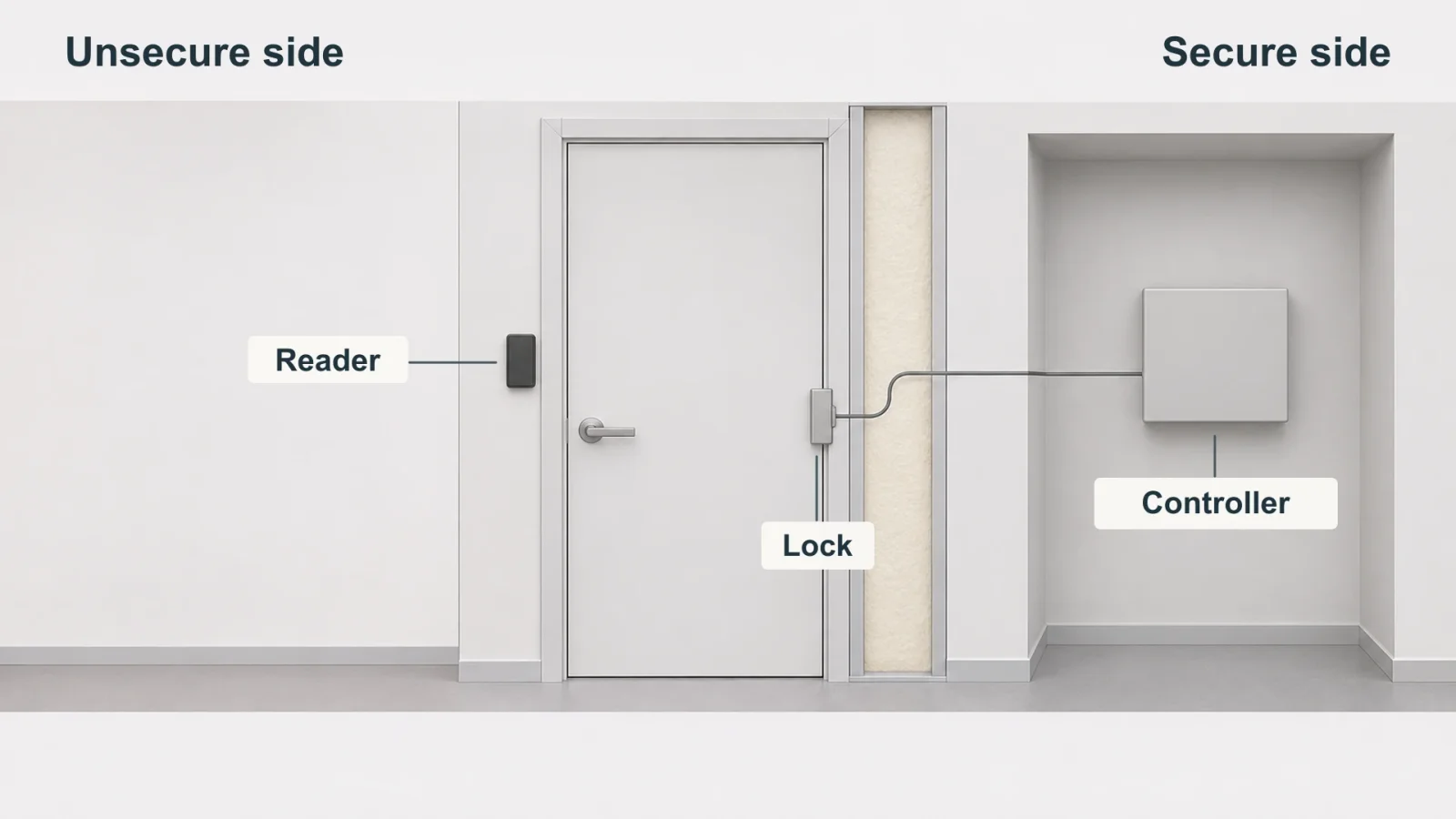
A single door controller is not the same as a standalone system. Specify door count, reader ports, lock outputs, the host link, and how the system will be administered.
Read article ↗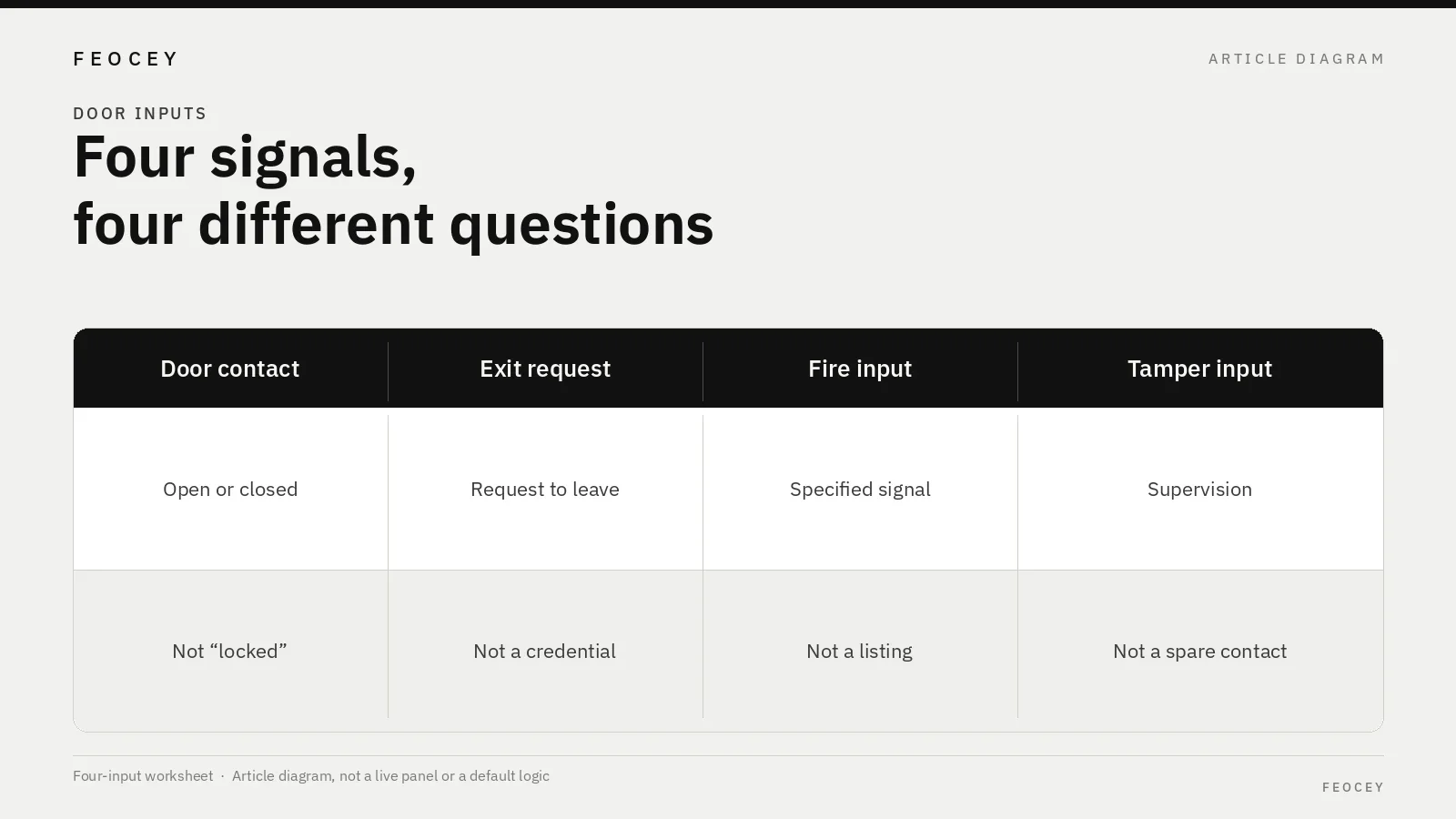
Access Control Planning
Door Contact, Exit Button, Fire and Tamper Inputs: What Each One Is For
A door contact reports whether a leaf is open or closed, not whether it is locked. An exit button is not a credential, and fire or tamper inputs follow the configuration actually specified. This article separates those four signals.
Read article ↗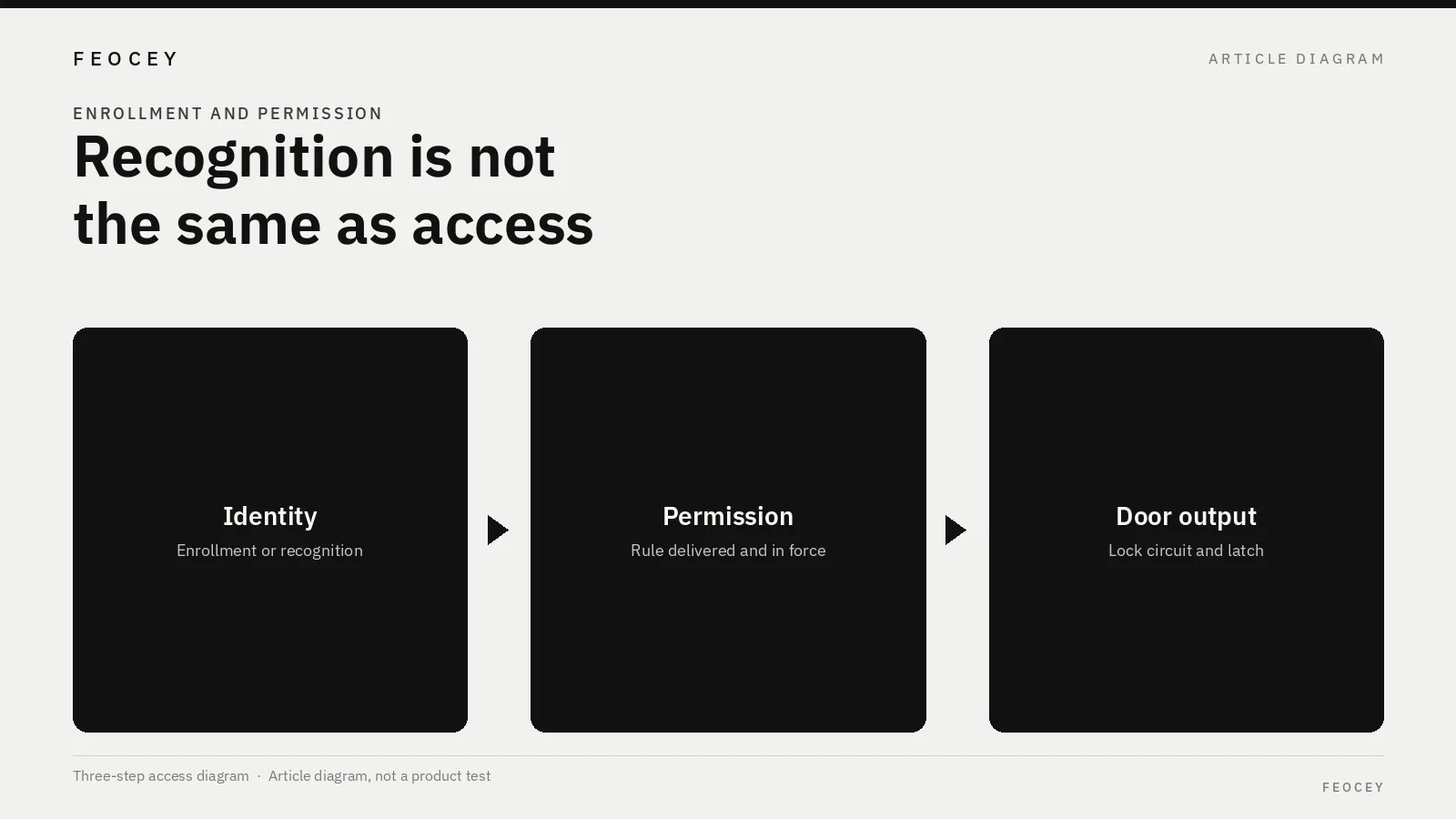
Access Control Planning
Enrollment Is Not Permission: Why a Recognized Person Can Still Be Denied
A recognized employee can still be denied entry. Follow a 7:56 a.m. badge attempt across enrollment, the access rule and the door observation to route the ticket correctly.
Read article ↗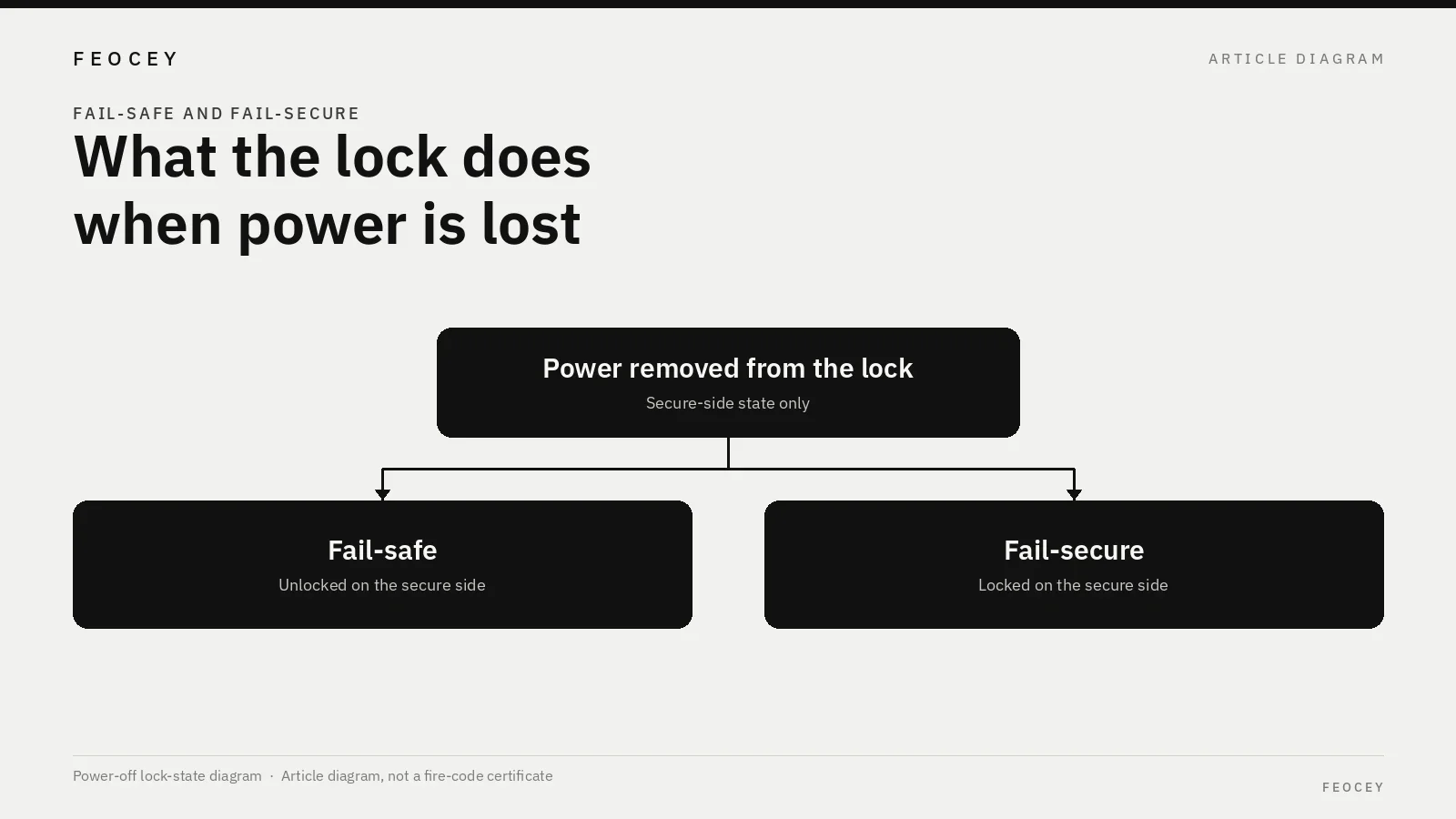
Access Control Planning
Fail-Safe and Fail-Secure: What a Door Lock Does When Power Is Lost
Fail-safe and fail-secure describe the secure-side state of a lock when power is removed. They do not, by themselves, make a door fire-compliant or trap people inside. This article separates power-loss behavior from mechanical egress, fire signals, and lock power.
Read article ↗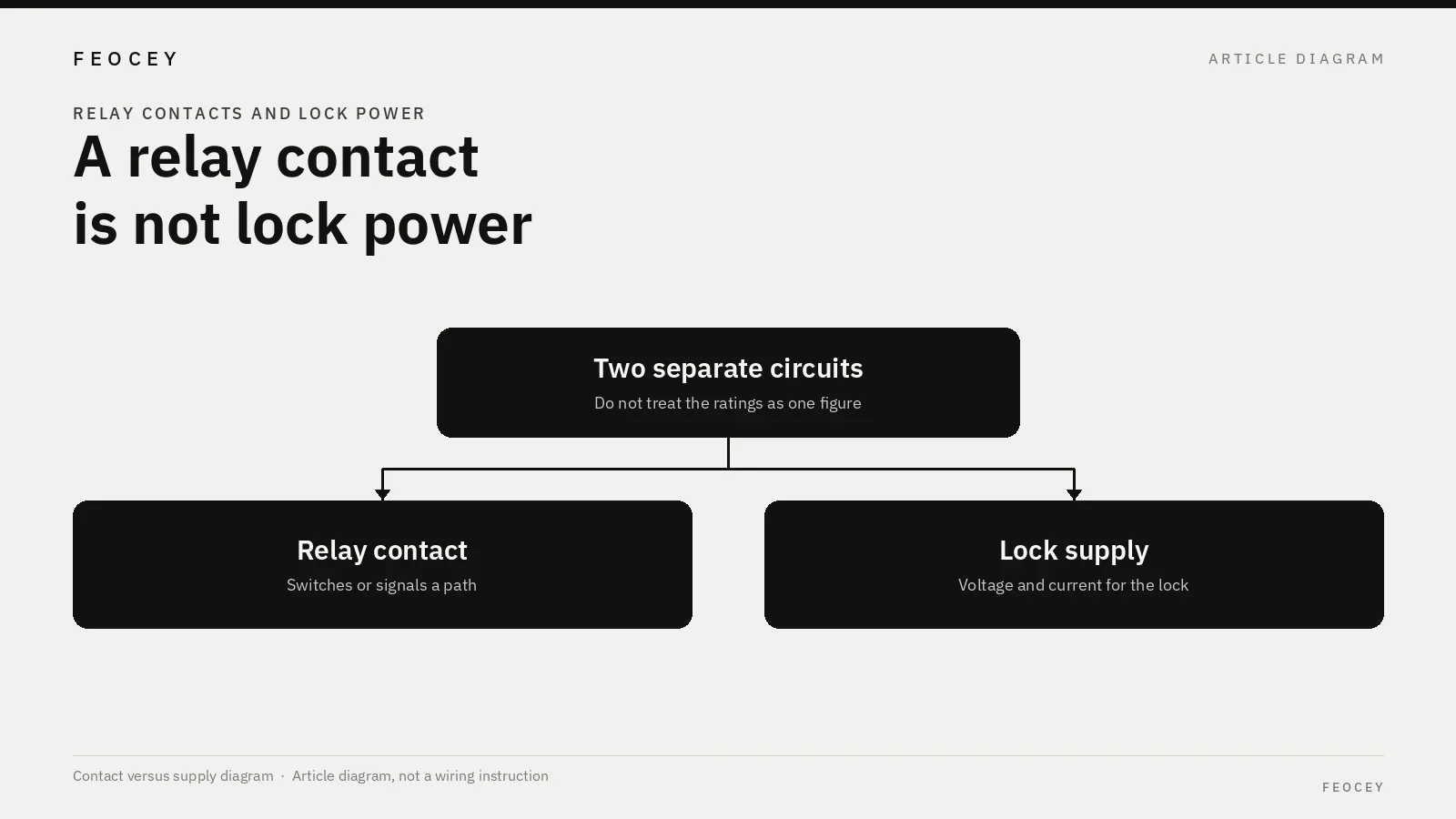
Access Control Planning
A Relay Contact Is Not Lock Power: Two Circuits That Are Easy to Treat as One
A relay contact can switch a lock circuit, but it does not supply the lock’s voltage or current. This article explains the two circuits, why their ratings are not interchangeable, and how to tell them apart on a drawing.
Read article ↗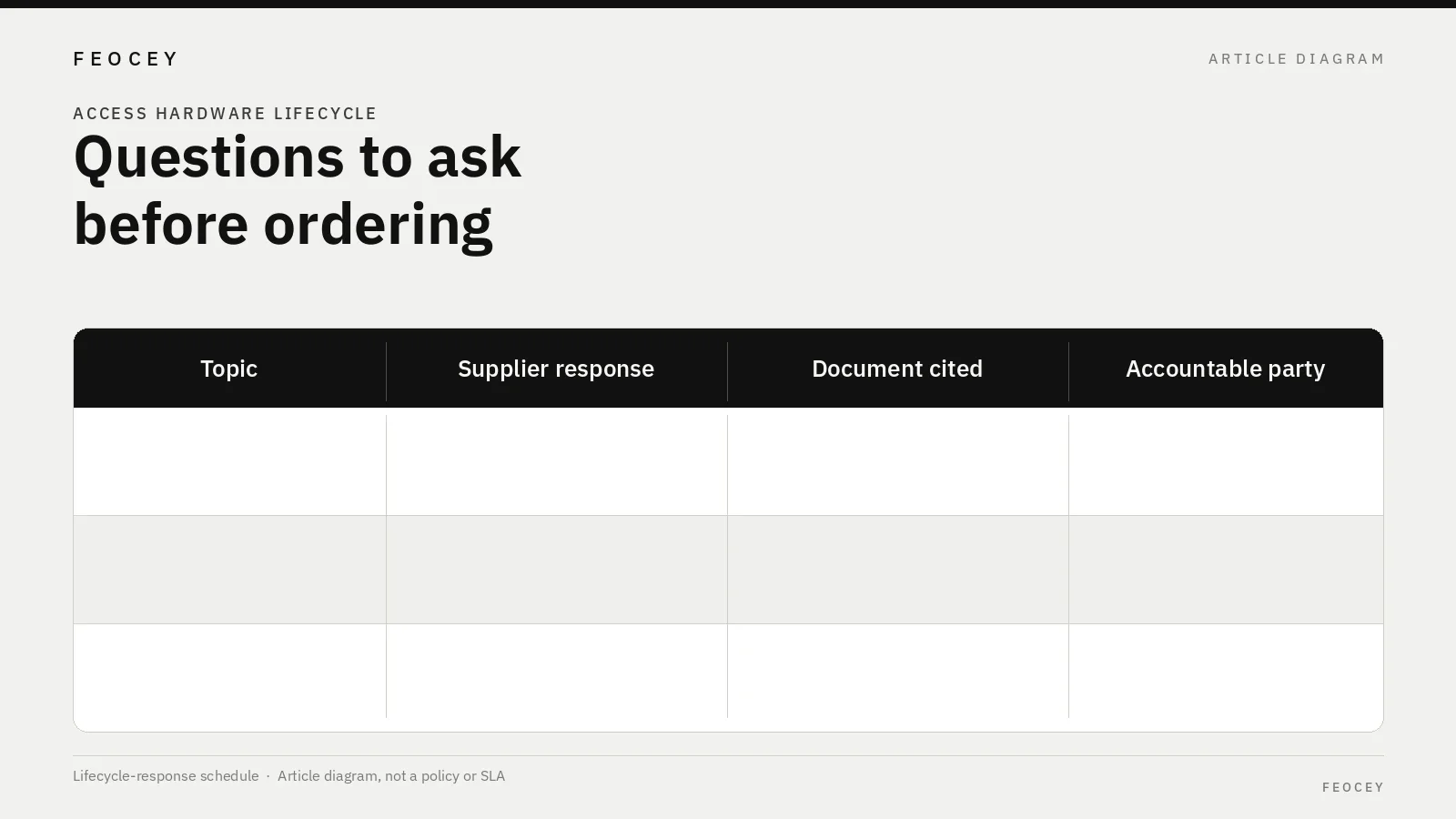
Hardware procurement
Access Control Hardware Lifecycle: Questions to Ask Before Ordering
Compare purchase, repair and software-support dates, then use a worked spare-stock calculation to decide when to place a last-time order for access control hardware.
Read article ↗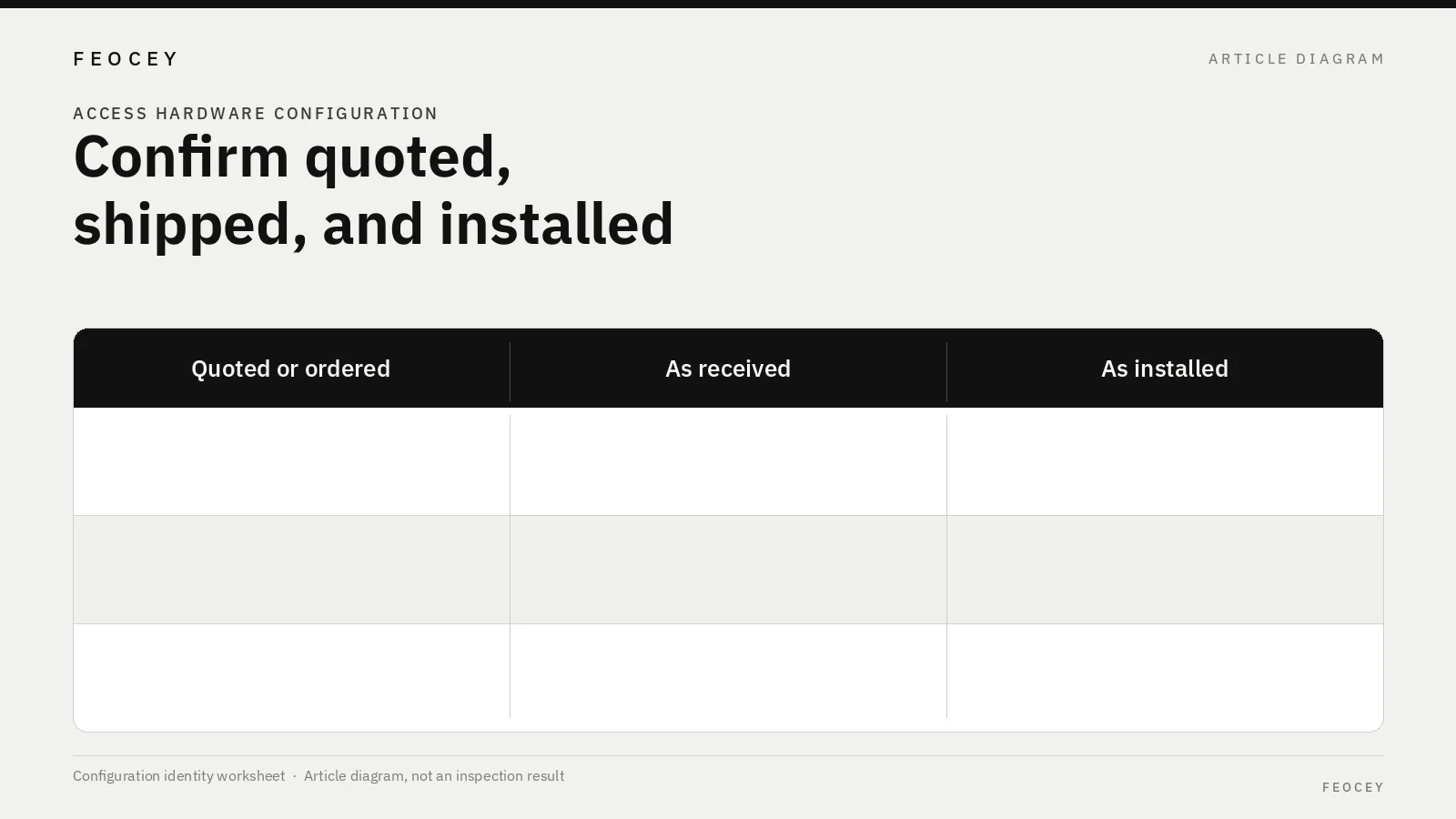
Hardware procurement
Access Control Hardware: Confirm the Quoted, Shipped, and Installed Configuration
Check access control hardware against the quote, packing list, received unit, and first installation. Use a worked receiving record to decide what to accept and what to hold.
Read article ↗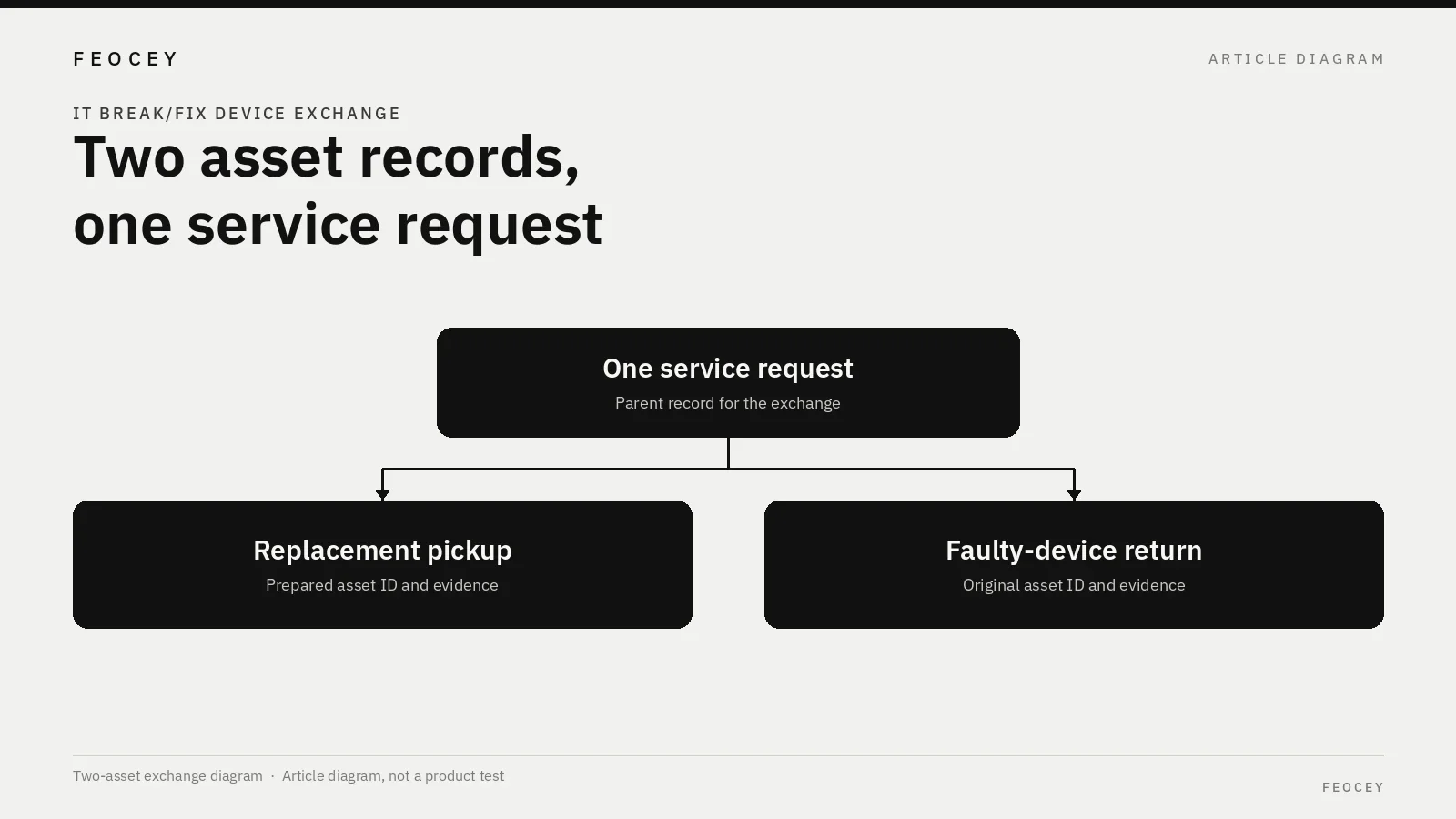
Asset locker planning
Asset Management Lockers: Plan an IT Break/Fix Device Exchange
Follow an IT break/fix exchange through asset management lockers. Reconcile the loaner, an incorrect return and the repair queue before closing the service ticket.
Read article ↗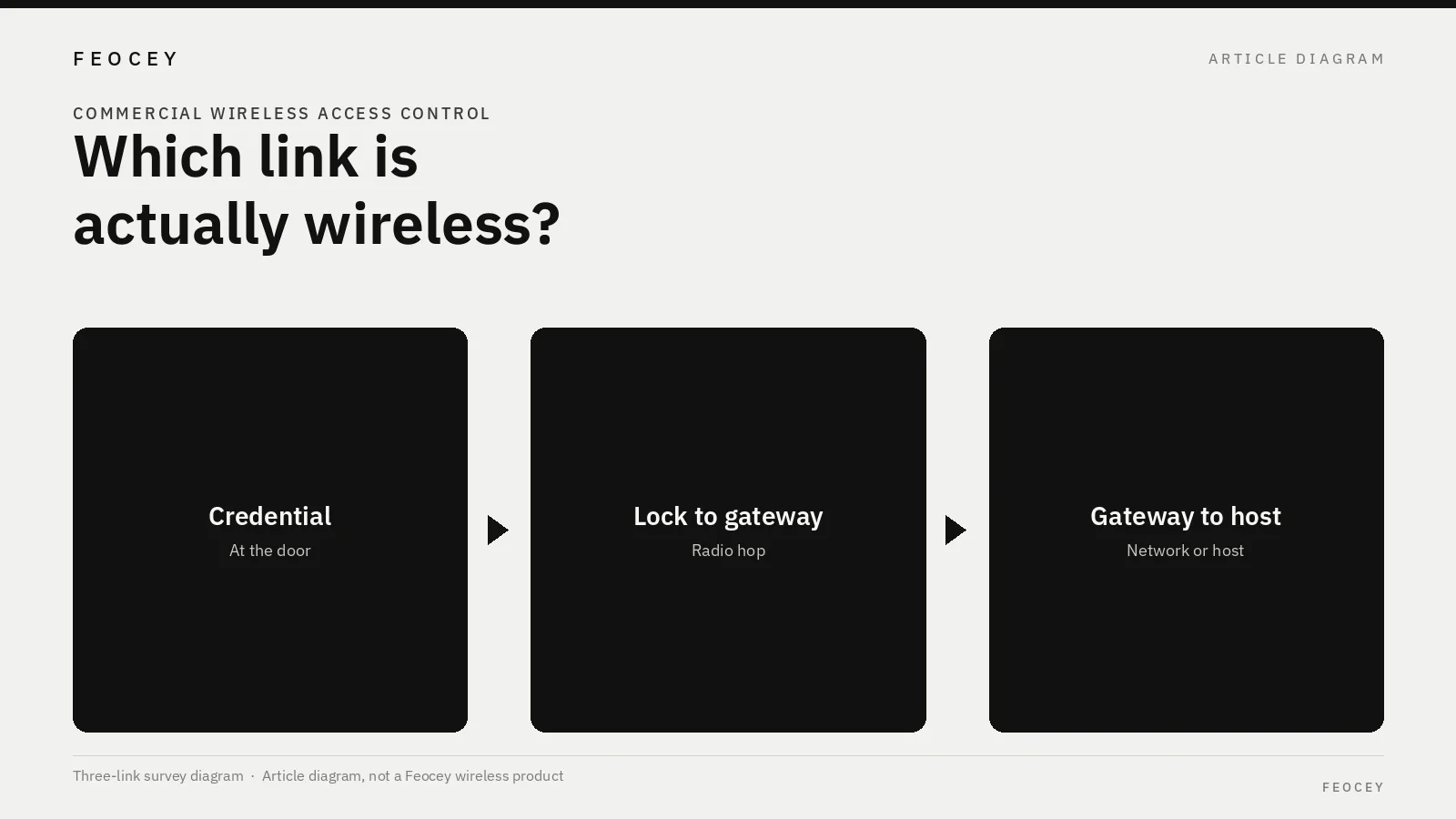
Entrance planning
Commercial Wireless Access Control: Which Link Is Actually Wireless?
Evaluate commercial wireless access control by measuring when a change reaches the door. Compare daily and gateway update paths, power, survey evidence and maintenance.
Read article ↗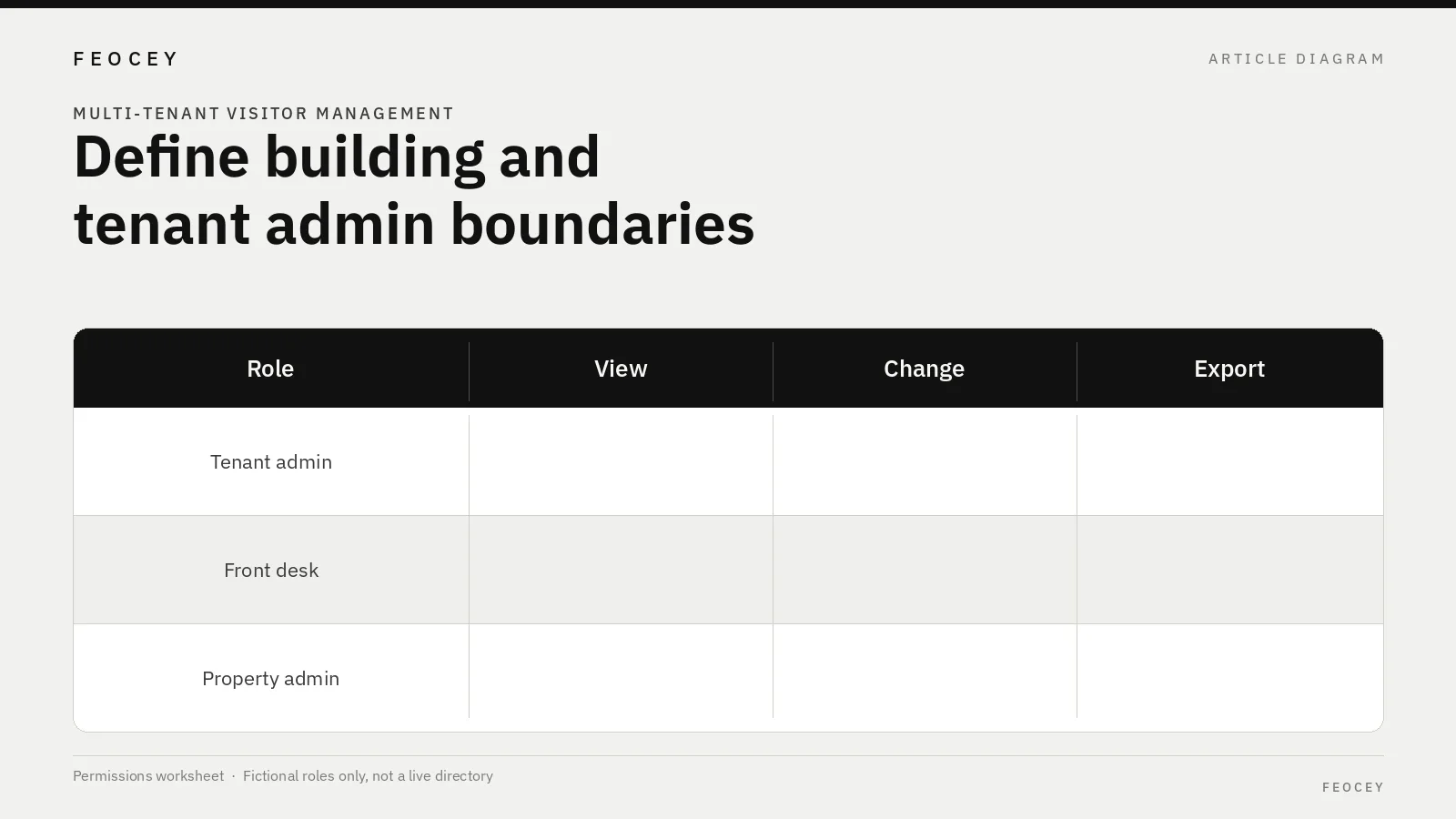
Visitor management planning
Multi-Tenant Visitor Management: Define Building and Tenant Admin Boundaries
Test multi-tenant visitor management with one guest, two appointments and a cancellation. See what reception, each tenant and a temporary approver should see.
Read article ↗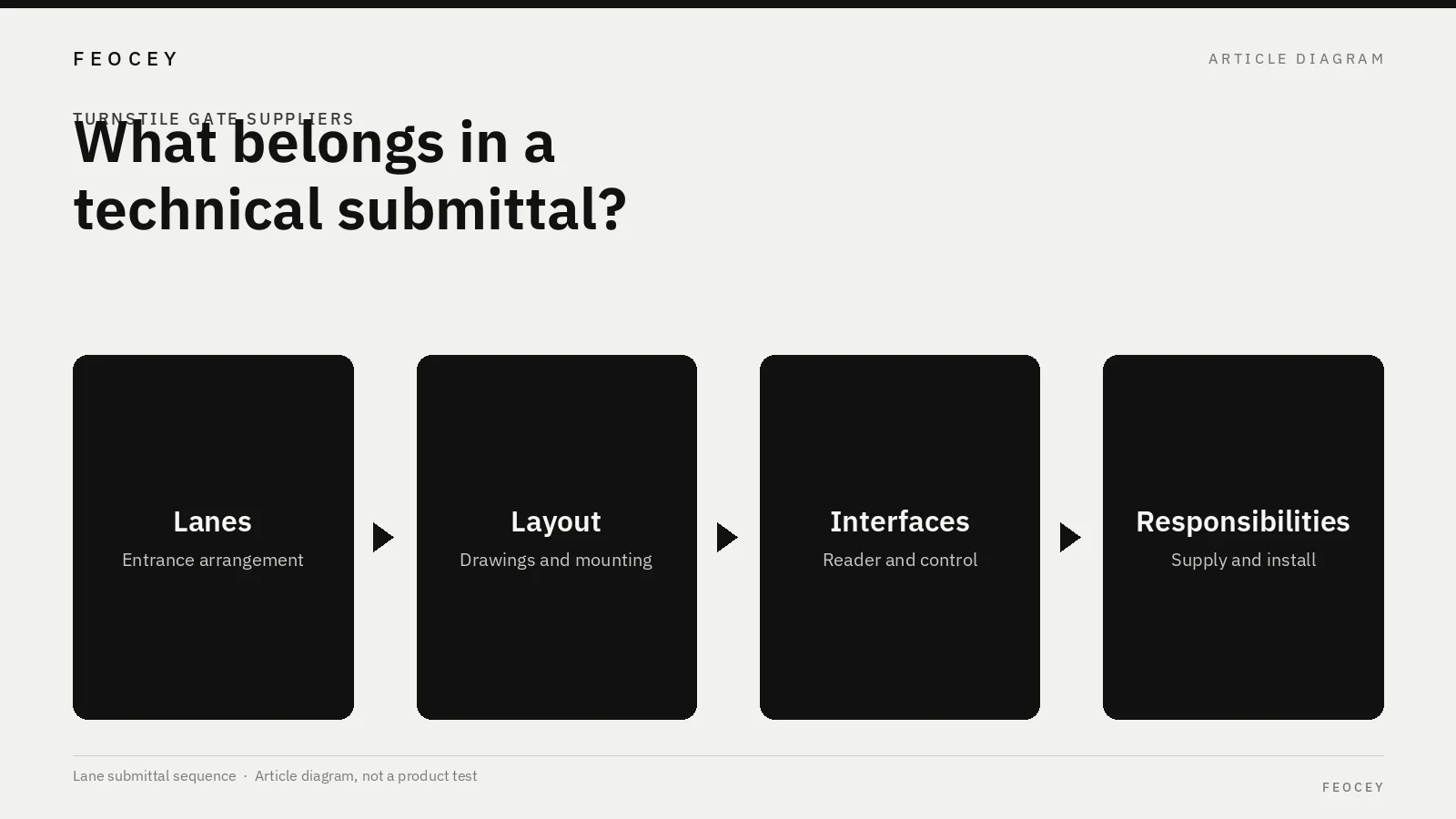
Entrance planning
Turnstile Gate Suppliers: What Belongs in a Technical Submittal?
Compare turnstile suppliers with a lane-by-lane technical submittal covering layout, mounting, interfaces and responsibility—not a cabinet count alone.
Read article ↗
Coworking operations
What Coworking Booking Software Should Do When a Meeting Moves
Test coworking booking software when one meeting in a series changes rooms. Check the original occurrence, overlapping room access and a delayed calendar update.
Read article ↗