
Project planning
Time and Attendance Software Pricing: How to Build a Comparable Quote
Compare time and attendance software pricing with one shared scope for employees, sites, terminals, deployment, integration and maintenance. Build a quote request that exposes missing work without assuming a Feocey price or licensing model.
Before you choose
Key takeaways.
- Give every supplier the same employee, site, terminal and service assumptions before comparing totals.
- Separate software rights, implementation, device integration and ongoing responsibilities in the quote.
- Evaluate an FCV4907 terminal as one defined part of the proposed attendance solution.
A comparable quote begins with one project boundary
Time and attendance software pricing is comparable only when proposals describe the same work. Give suppliers one written project brief, then ask each to identify its charging basis, included deliverables and exclusions. A lower total is difficult to interpret when one proposal includes deployment and another covers software access alone.
A complete-solution buyer should describe the required attendance outcome, the existing management application and the teams responsible for implementation. A platform partner may instead need device integration or a custom interaction. State that difference early so suppliers do not price different solutions against the same headline requirement.
Use a specific evaluation scenario without treating it as a purchase commitment. For example, describe two offices, a defined employee population and the intended clock-in locations. Ask suppliers to show how the proposal changes when another site or terminal is added. Keep the assumptions visible beside every revision.
Ask what the software allowance actually measures
The software line should explain what the buyer receives and how the supplier measures permitted use. Ask whether the proposed arrangement depends on named employees, active employees, administrators, sites, terminals or another unit. These are questions for the quotation, not a statement that Feocey uses any particular licensing model.
An employee count needs a definition before it can support a comparison. Ask how new starters, departing employees, seasonal workers and retained historical records affect the stated allowance. If a proposal uses an active-employee measure, request its exact definition and the point at which the count is assessed.
Ask the supplier to list the functions covered by the proposal rather than describing an unspecified attendance package. Separate event collection from schedules, leave approvals, corrections and downstream processing. A terminal specification does not establish that a leave engine or payroll calculation service is included in the software scope.
Count sites, terminals and installation work separately
A site is an operating location; a terminal is an interaction point. One office may need several terminals, while several small offices may each have one. List both counts and describe the expected arrival pattern, mounting position, available network connection and local support contact for each location.
The hardware schedule should identify the exact model and selected configuration. Ask whether brackets, power components, cabling, installation labor and commissioning are included or supplied by another party. A pictured accessory or demonstration setup should not become an assumed item in the order without written confirmation.
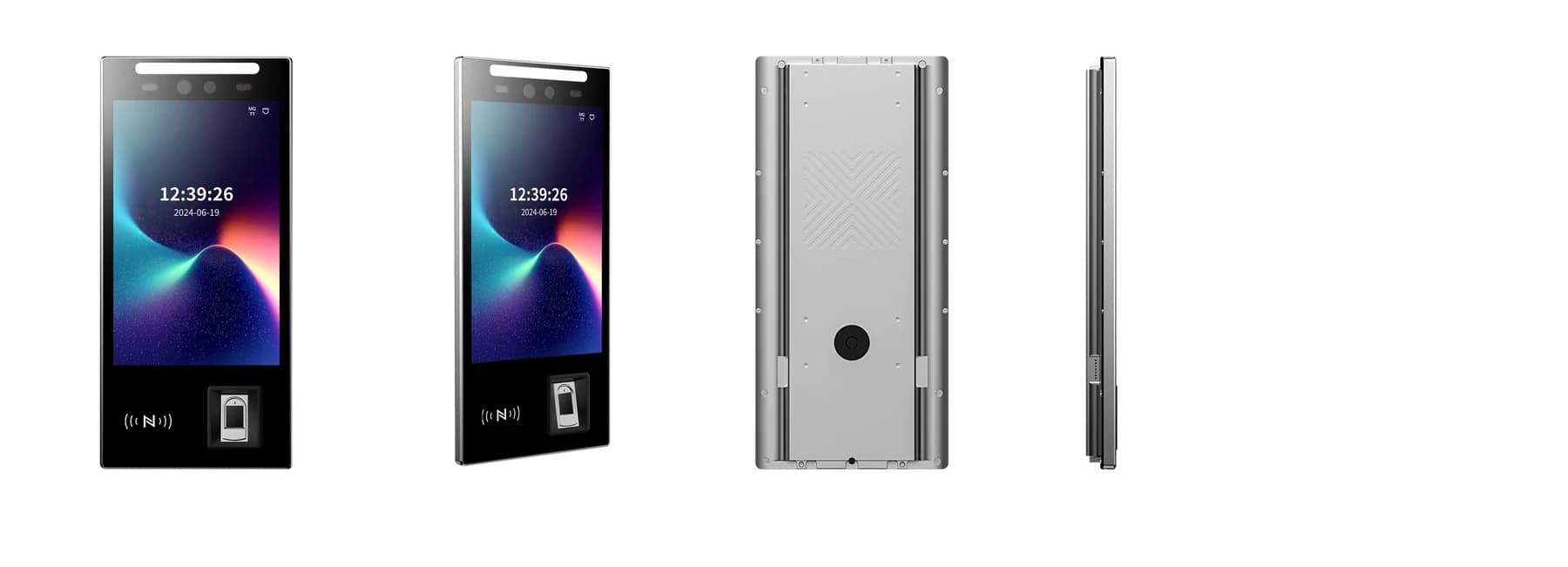
For an FCV4907 evaluation, describe the required face or fingerprint interaction and any alternative credential method. Its portrait touch display and fingerprint input provide a physical interaction point. The selected firmware, management application and project design determine how that interaction becomes an attendance record. Keep building-entry permissions separate in the scope.
Expose the work between the device and the application
Deployment and integration can disappear inside broad descriptions such as setup included. Ask where the proposed application will run, who provisions it, who maintains the host environment and what the buyer must supply. Request the same responsibility map from each supplier even when their deployment proposals differ.
Use the comparison table to make missing deliverables visible. Its categories are a procurement framework, not Feocey service bundles. A supplier can mark an item included, separately quoted or outside scope, but should name the responsible party and the evidence that will demonstrate completion.
| Scope area | Request in the quote | Evidence of completion |
|---|---|---|
| Software rights | Permitted users, sites, devices and included functions | Written entitlement and scope |
| Deployment | Hosting location, setup tasks and operating owner | Agreed environment and handover record |
| Terminal supply | Model, configuration, accessories and quantities | Matched sample and itemized schedule |
| Interface development | Data mapping, supported operations and exclusions | Documented interface and accepted test cases |
| Commissioning | Site work, configuration and operator instruction | Site acceptance and named owners |
| Maintenance | Coverage period, response arrangements and change boundary | Written service responsibilities |
Compare the same operating period and change assumptions
The commercial comparison should use one agreed operating period and the same scope assumptions. Ask each supplier to separate initial expenditure from charges that may continue during that period. Do not multiply a headline figure until the supplier has explained its unit, billing period and included services.
Keep optional items and buyer-supplied work visible outside the base total. A quote that excludes hosting administration or interface maintenance may still suit the project, but the buyer needs an owner and a separate allowance for those responsibilities. Do not treat an unpriced omission as a free service.
Ask what happens when the agreed design changes. Adding employees, moving a terminal, replacing a host application or changing an interface can affect different parts of the proposal. Request a change-control process and identify which rates or new estimates would apply, without assuming that every change attracts a charge.
- Show the quote currency, validity period and treatment of taxes, shipping and on-site expenses.
- Use the same starting quantities and operating period in every comparison.
- List optional work and unresolved assumptions beside the commercial total.
Tie implementation payments to reviewable deliverables
An implementation proposal needs a practical definition of finished work. Ask the supplier to identify design approval, sample evaluation, interface completion, site commissioning and handover deliverables where they apply. The commercial terms can then refer to agreed outputs rather than an ambiguous promise that the system will be ready.
Choose a small pilot that represents the intended scope. Verify the selected device interaction, the receiving application's event and the operator's review process. Record who investigates a discrepancy and which party changes the interface. A successful connection alone does not prove that the complete attendance workflow meets the requirement.
For platform partners and system integrators, separate reusable integration work from work specific to this customer. Ask who maintains the interface when device firmware or the receiving application changes. The answer helps distinguish an initial development quote from an ongoing support commitment and prevents both parties from assuming the other owns future changes.
Build an FCV4907 inquiry around the missing decisions
Use the FCV4907 product reference and its approved manual to identify the device being evaluated. Confirm the fingerprint module, firmware, network arrangement and mounting assembly. The manual contains differing fingerprint-capacity figures, so request the capacity for the supplied configuration rather than copying one number into the tender.
Bring the receiving application, required event meaning and sample acceptance cases to the integration inquiry. Ask for the reference that matches the exact application and firmware. An Ethernet or serial connection does not, by itself, establish compatibility with a particular attendance platform.
Send the employee and site assumptions, terminal quantities, deployment responsibilities and desired support boundary with your FCV4907 project inquiry. Ask Feocey to evaluate the relevant hardware, integration or wider solution scope. The result should be a comparable written proposal, with unresolved items identified before an order is agreed.
Source references
FCV4907 user manual — confirm the supplied configuration ↗Feocey: Choosing a time and attendance system ↗Put the guide to work
Find the reference for your model.
Compare each device with your requirements. Confirm configuration and compatibility for the complete installation.
FCV4907 →
Face authentication terminal
Ask about FCV4907 ↗