
Manufacturing attendance
Time and Attendance Software for Manufacturing: Who Owns Temporary Worker Records?
Plan time and attendance software for manufacturing around who registers temporary workers, verifies hours, resolves exceptions, and closes an assignment.
Before you choose
Key takeaways.
- Decide which team owns the person record, assignment record, raw punch, and approved timecard.
- Tie each submission to an assignment and give both organizations a way to reconcile corrections.
- Test the end of one assignment and the start of another with the same sample worker.
Assign responsibility before the first shift
Time and attendance software for manufacturing should help a plant and its staffing agency agree on who registers a temporary worker, who verifies recorded hours, and who confirms the final handoff. Start with one assignment and follow it from the agency's start notice through the worker's final shift. Use the staffing agreement and your operating policies to name the person who can decide each exception. A device can capture an interaction at the site. An agreed process connects that event to an assignment and a reviewed record.
Ask each team to bring the record it treats as authoritative. A staffing coordinator may work from an assignment list, a plant supervisor from a shift roster, and an agency payroll operator from an approved hours file. Compare the three before asking a vendor to build a single view. A shared display helps when its owners understand which team can change a start date, who can approve an hours correction, and what evidence should accompany each change.
Keep the worker and assignment identifiers separate
The person identifier tells the plant which worker it recognizes. An assignment identifier describes the period, site, supplier, or work arrangement under which it expects that worker to attend. In a fictional plant, a worker finishes a packaging assignment on Friday and returns next Wednesday under a different assignment. The pilot should show that both sets of records remain attributable and that the later start does not rewrite the earlier handoff.
Before the first shift, agree which fields the plant needs from the agency. A candidate list includes an approved identifier, supplier, authorized site, assignment start and end, and a named coordinator. Confirm who checks a mismatch, what the employee is told at arrival, and what record must exist before regular capture begins. If a temporary record is authorized during onboarding, agree who reconciles it and what evidence confirms that it was linked to the right assignment.
| Stage | Example operational owner | Evidence to hand over |
|---|---|---|
| Assignment start | Staffing coordinator and plant scheduler | Agreed person identifier, assignment reference, site, and start window |
| Hours review | Plant supervisor | Hours approved for the assignment or an exception with a named reviewer |
| Submission | Authorized attendance owner | Approved file or batch reference with work dates and receipt status |
| Assignment end | Staffing coordinator and site administrator | Close notice, unresolved-hour list, and access handoff confirmation |
Trace a disputed shift without losing the original record
Use a sample worker who clocks in correctly on a scheduled morning, moves to a different line at the supervisor's direction, and reports a missing end-of-shift event. The site supervisor verifies what happened and records the reason for a proposed correction. The attendance owner preserves the original events and identifies the assignment tied to the changed record. The staffing agency confirms whether it accepted the resulting submission or needs a revised record. Each of those actions should identify its owner and show a completion state that the next team understands.
Ask the vendor to show a rejected submission as well as a successful one. In the test, send a sample row with a mismatched assignment identifier. Check who sees the rejection, who fixes the mapping, and whether the original evidence remains available. If the same worker appears twice in the roster, the system should surface the ambiguity for an authorized reviewer. A reliable review is more important than an interface that automatically makes two similar names look like one person.
A plant employee and an agency employee may need different views. The agency might need approved hours and the dates they cover. The line supervisor may need attendance exceptions for the shift they supervise. Define which roles can read, propose changes, approve, and export records. Include a test account that should see only one assignment. Verify how a correction is delivered after an assignment ends and how the appropriate reviewer can still find its supporting records.
Use a terminal where it supports the process
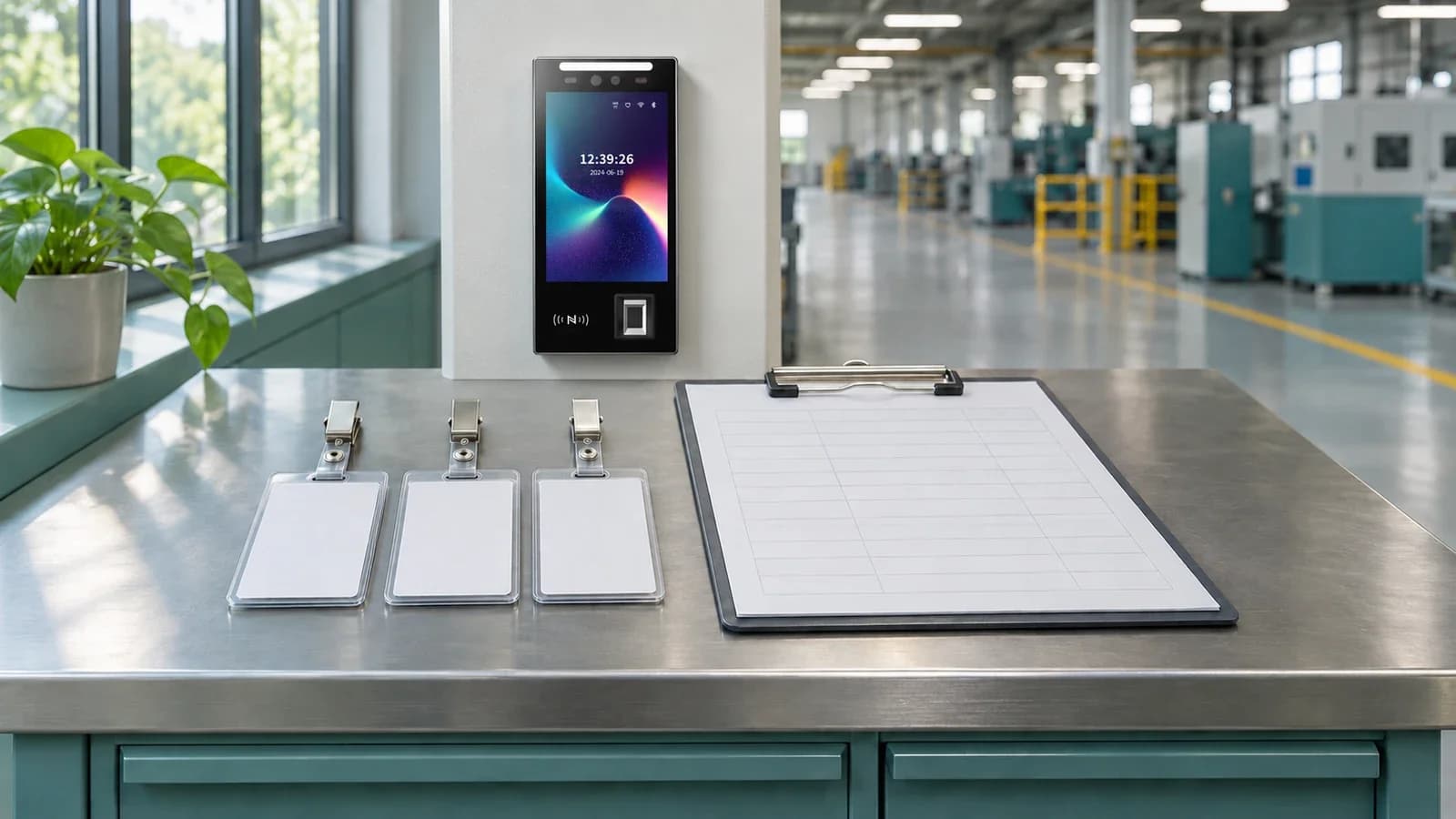
The FCV4907 is a Feocey terminal for access and attendance. If your plant evaluates the FCV4907 for a shared clocking point, test the credential and application that will actually be used, and verify the event that reaches the host. Ask how the attendance application will match the event to the authorized assignment. A successful door interaction does not establish an approved timecard, so the test should include the attendance record as a separate result.
Use the integration guide when working with a platform partner. Bring the model, selected application, and sample event format to the supplier discussion. Have the attendance platform demonstrate the staffing assignment, time review, and export separately. Site exposure, mounting, network conditions, and the working credential method belong in the hardware evaluation. If shifts use a particular PPE setup or a shared entry channel, reproduce the actual clocking interaction in a safe test environment.
Close an assignment once without losing unsettled hours
Set a planned end date and agree who announces early departures or extensions. At the end of the test assignment, confirm that the access owner has handled current permissions and the attendance owner can still find pending corrections from active work dates. The agency should be able to identify the last approved batch and know where to send a later dispute. Close the operational checklist only after the teams agree which unresolved items, if any, are still open and who is following them.
Use three test cases before committing to a wider rollout. Start the worker on schedule, change an assignment date, and close an assignment with a pending hours correction. Require named owners and receipt evidence for each handoff. Add a return under a second assignment to prove that older records remain intact. For a device discussion, share the model and staffing workflow with Feocey, including where people clock in and which existing platform handles assignment records.
Source references
FCV4907 user manual ↗Put the guide to work
Find the reference for your model.
Compare each device with your requirements. Confirm configuration and compatibility for the complete installation.
FCV4907 →
Face authentication terminal
Ask about FCV4907 ↗