

The original FEOCEY X GEN1 combines a coreless motor with a documented silent-mode setting. Correct adapter fit and smooth latch movement also matter to the sound heard at the door.
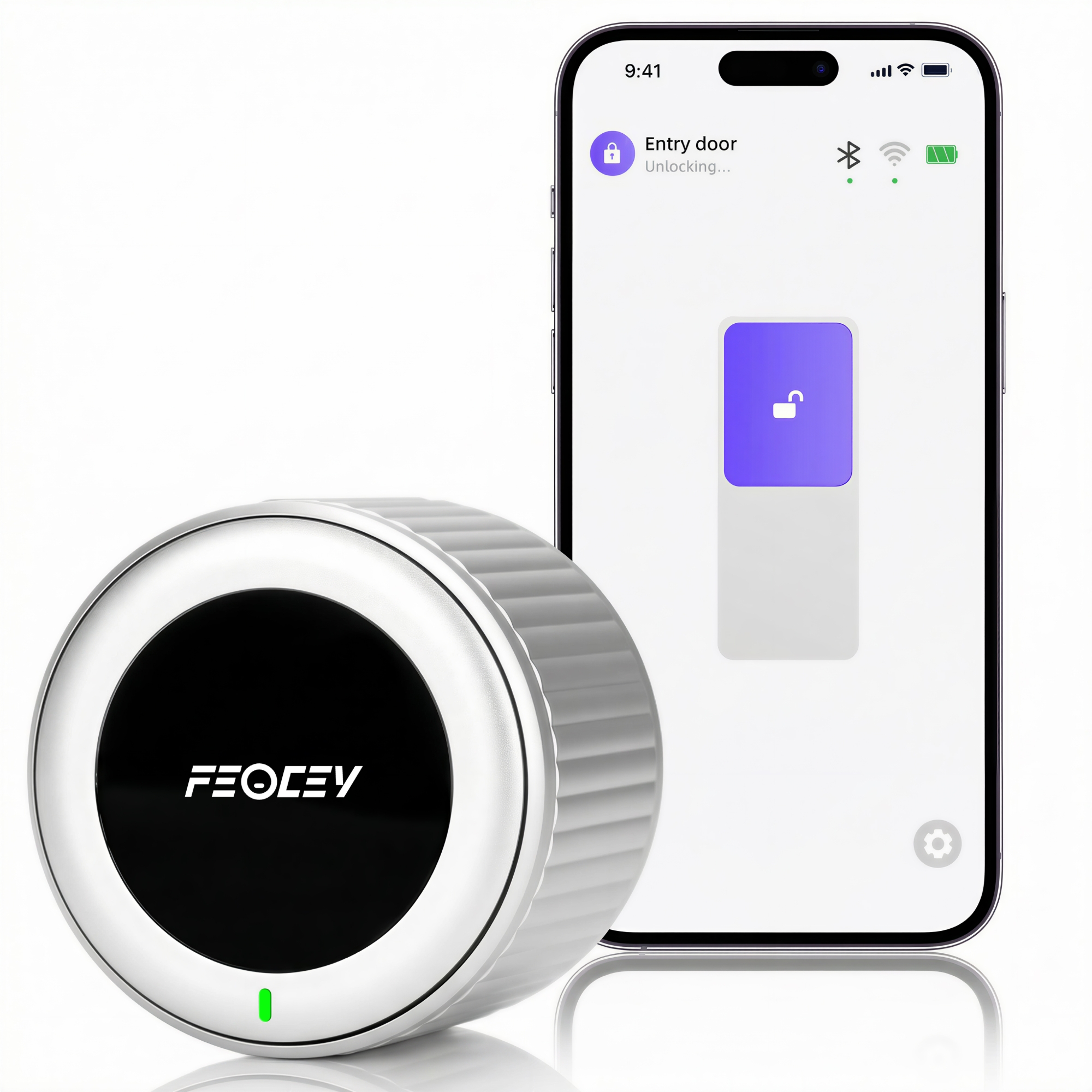
What supports quieter everyday operation?
This article covers the original FEOCEY X GEN1 / X-Gen 1 Smart Lock 001 retrofit product. Its manual specifies a coreless motor and lists silent mode among the firmware controls. Feocey’s original supplied product material describes the motor as quiet and smooth.
Those are useful model-specific features for households that want less audible feedback and a smoother powered movement. Silent mode is a product setting; it should not be read as a promise that every mechanical part of a door becomes inaudible.
The five newer Tuya-based locks have their own motors, settings and manuals. Their operating noise or application options are not established by X GEN1 material.
What does silent mode mean in practice?
Check the installed firmware and FEOCEY Home settings for the available silent-mode control, then test its behaviour at the door. Distinguish electronic feedback from the motor, moving latch, strike contact and the sound of the door closing.
A quiet-mode setting can be useful when family members arrive late, when a nearby room is used for rest or when a home office sits close to the entrance. The actual disturbance depends on the door assembly, room, background sound and user; it is not a guaranteed sleep or pet-behaviour outcome.
Check installation before judging noise
- Confirm that the original deadbolt moves smoothly by hand before fitting the smart lock.
- Use the adapter and mounting arrangement that match the existing tailpiece.
- Check that the latch enters the strike without rubbing or requiring the door to be pushed into position.
- Complete calibration and compare open-door and closed-door operation to identify alignment problems.
- Keep the specified batteries in good condition and follow the supplied installation and maintenance guidance.
Do not force an incorrect adapter or use the motor to compensate for a binding door. If movement becomes unusual, review the fit and mechanical condition before continuing normal use.
How should a low-decibel claim be compared?
A useful numerical comparison needs the exact product, operating mode, distance, room, background level, instrument and whether the result is a peak or an average. Motor operation, an electronic tone and a door slam are different measurement events.
Compare measured operating sound under the same conditions, alongside the documented coreless motor and quiet-mode features. A single number without that context does not establish which lock will sound quieter in a particular door.
For a project with an acoustic requirement, request the relevant model’s test conditions and evaluate a sample in a representative door assembly.
Other X GEN1 features to check with the same model
The original product offers an interior retrofit that retains the compatible exterior cylinder, built-in 2.4 GHz Wi-Fi, nearby Bluetooth, gyroscope-based door-position functions and Alexa integration. Feocey’s original material describes an eight-minute interior installation; confirm fit first and allow for App setup, calibration and tests separately.
Battery-life statements in the available X GEN1 documents use different versions and conditions, so this guide does not transfer a twelve-month figure from a different lock. Ask for the applicable battery-life conditions for the supplied hardware and firmware, including operation frequency and network use.
For PIN access, include the compatible Magic keypad in the review. Quiet operation, door fit, access method and connectivity should be selected together rather than inferred from one feature label.
What should a buyer send for a quiet-entry project?
Send the lock and door photos, existing deadbolt details, number of doors, nearby room use and the relevant operating times. If there is a noise limit, state the measurement position and test requirement rather than only asking for a silent lock.
For apartments or managed properties, also confirm property approval, access administration, network availability and backup keys. A sample installation can establish the fit and acceptable operating sound before a wider rollout.
Quick answers
Is quiet operation a real feature of the original lock?
Yes. The X GEN1 manual identifies the coreless motor and silent-mode control, and original supplied artwork describes quiet, smooth operation. This guide keeps those benefits.
Does silent mode mean the door makes no sound?
No. Electronic feedback, the motor, latch contact and the closing door are separate sources of sound. Check the installed product and the door assembly.
Can I use a single dB number to compare every smart lock?
Only when the model, test conditions and measurement method are comparable. Request that evidence for a project with an acoustic requirement.
Product references
- X GEN1 Product Manual, hardware parameters (PDF p. 5).
- X GEN1 Product Manual, installation, calibration and function matrix (PDF pp. 6–11).
- Original Feocey product catalogue, X Wi-Fi Smart Lock (PDF p. 6).
- Original manufacturer X GEN1 artwork describing the coreless motor as quiet and smooth.
References identify the original X GEN1 product and the separate R model. Match the supplied hardware, firmware, accessory and application before applying a specification.
Review the right lock for your doors.
Share the lock photos and measurements, quantity, deployment market, access methods and network conditions. For X GEN1, include the existing deadbolt and adapter details.