Turnstiles & Gates

FC-TFTBJ

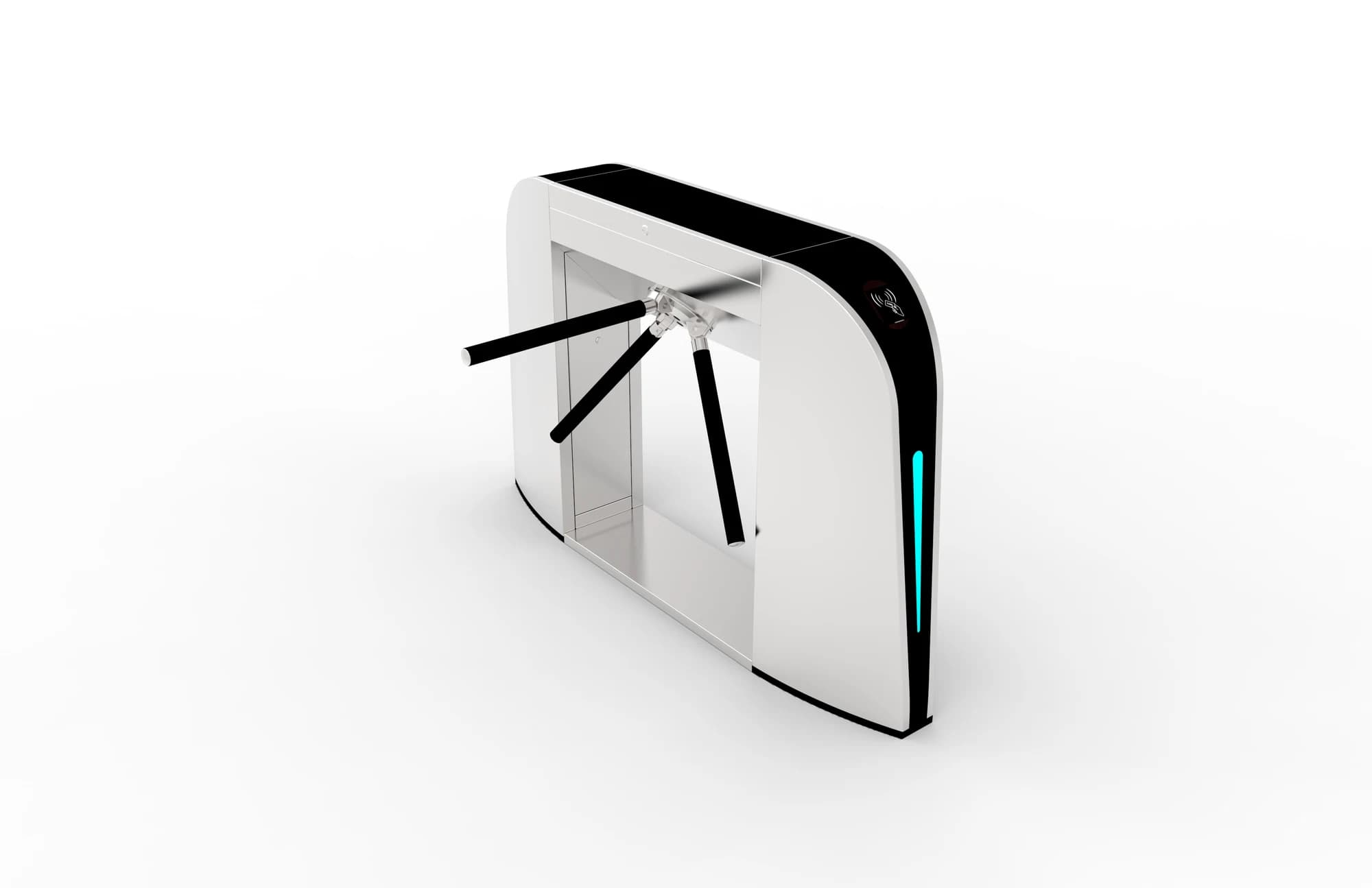
Compact bridge tripod turnstile

Compact bridge tripod turnstile.

A bridge tripod with direction indicators for supervised access checkpoints. Select the standard or automatic mechanism, then confirm its electrical and control specification.

  • Bridge cabinet
  • Direction indicators
  • Mechanism configuration options

Choose your configuration

Standard mechanism configuration. Confirm the supplied assembly and the complete installation drawing.

Your choice is included in the enquiry. Our team will confirm the supplied configuration and layout.

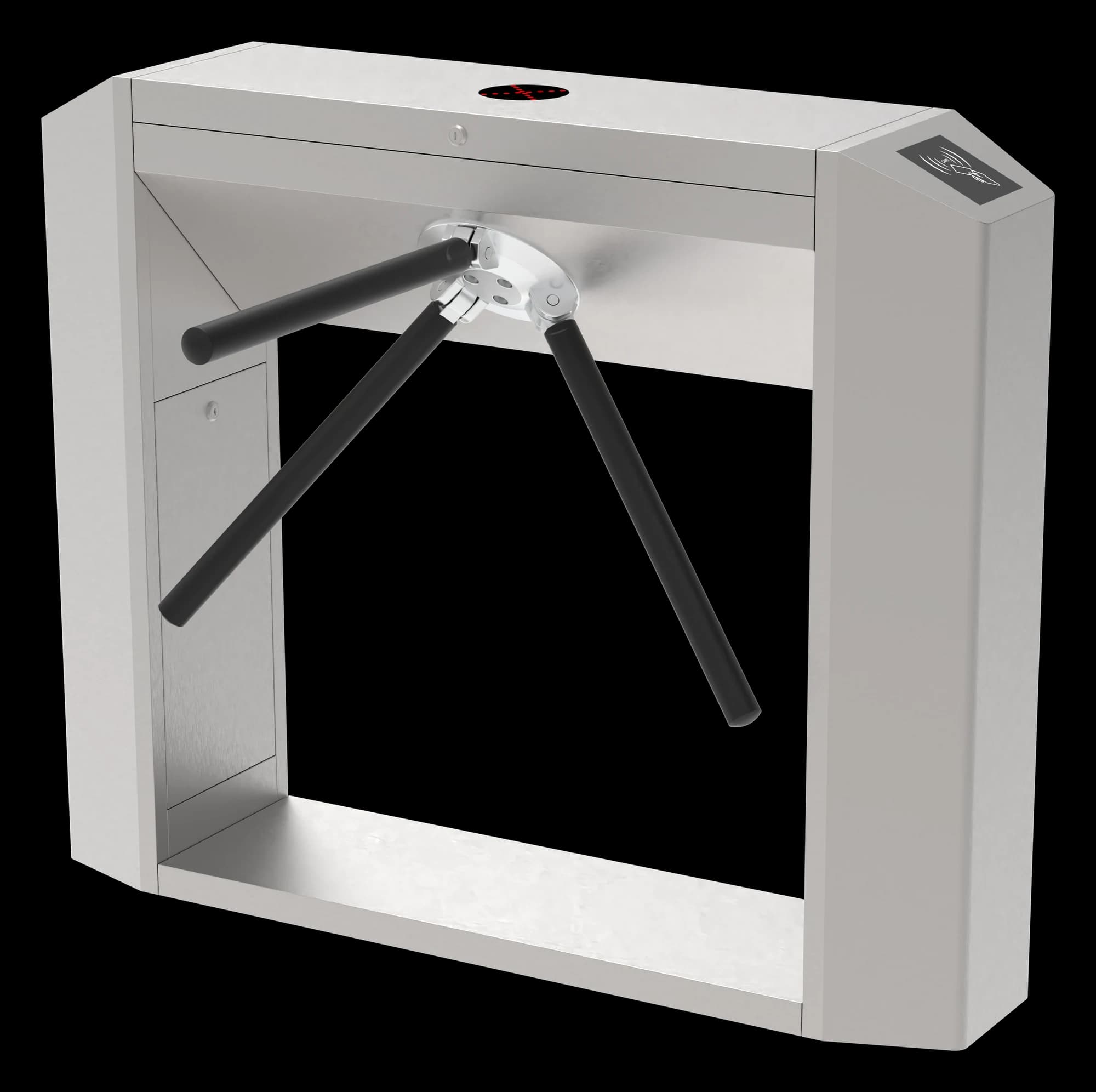
FC-TFTBJ individual rectangular bridge tripod turnstile cabinet
FC-TFTBJ · Supplied product view. Confirm the selected finish, mechanism and assembly.

Compact bridge tripod turnstile.
Plan your entrance.

A bridge tripod with direction indicators for supervised access checkpoints. Select the standard or automatic mechanism, then confirm its electrical and control specification.

Structure
Tripod turnstiles
Configuration
Select the mechanism
Installation
Confirm the order drawing

Product views show possible cabinet and lane arrangements. Readers and terminals are selected separately; final quantities and dimensions follow the confirmed order drawing.

Technical specifications.

FC-TFTBJ · Standard

Parameters describe the listed model configuration. Confirm the selected mechanism, final cabinet and lane dimensions, controller and order drawing. Throughput varies with access checks and passage conditions.

FC-TFTBJ specifications
ConfigurationStandard
StructureCompact bridge tripod turnstile
Cabinet dimensions1200 × 280 × 980 mm
Passage width550 mm
Cabinet / frame material304 brushed stainless-steel cabinet; SUS201 arms
Standard mechanismSemi-automatic mechanism with hydraulic buffering
More specifications
FC-TFTBJ additional specifications
Specified electrical supply24 V / 50 W; confirm the supply stage and wiring
CommunicationRS485; confirm the controller protocol
IndicatorDynamic direction / status lighting
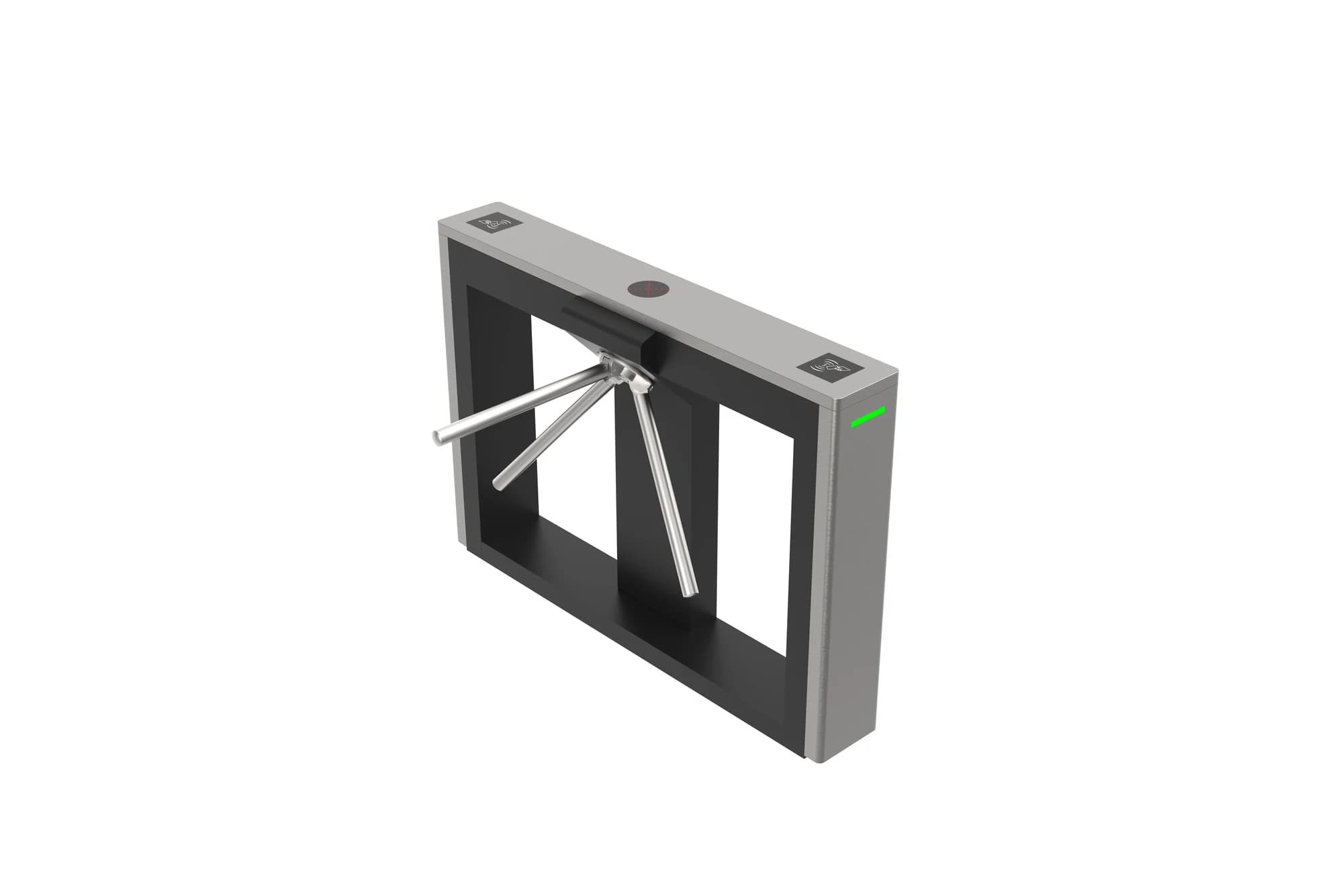
FC-TFTBJ individual rectangular bridge tripod turnstile cabinet
FC-TFTBJ · Supplied product view. Confirm the selected finish, mechanism and assembly.

Match the gate
to the entrance.

Workplaces, business parks and supervised access checkpoints. Review the project environment, arm clearance and a separate accessible route before selecting the installation position.

Product views show possible cabinet and lane arrangements. Readers and terminals are selected separately; final quantities and dimensions follow the confirmed order drawing.

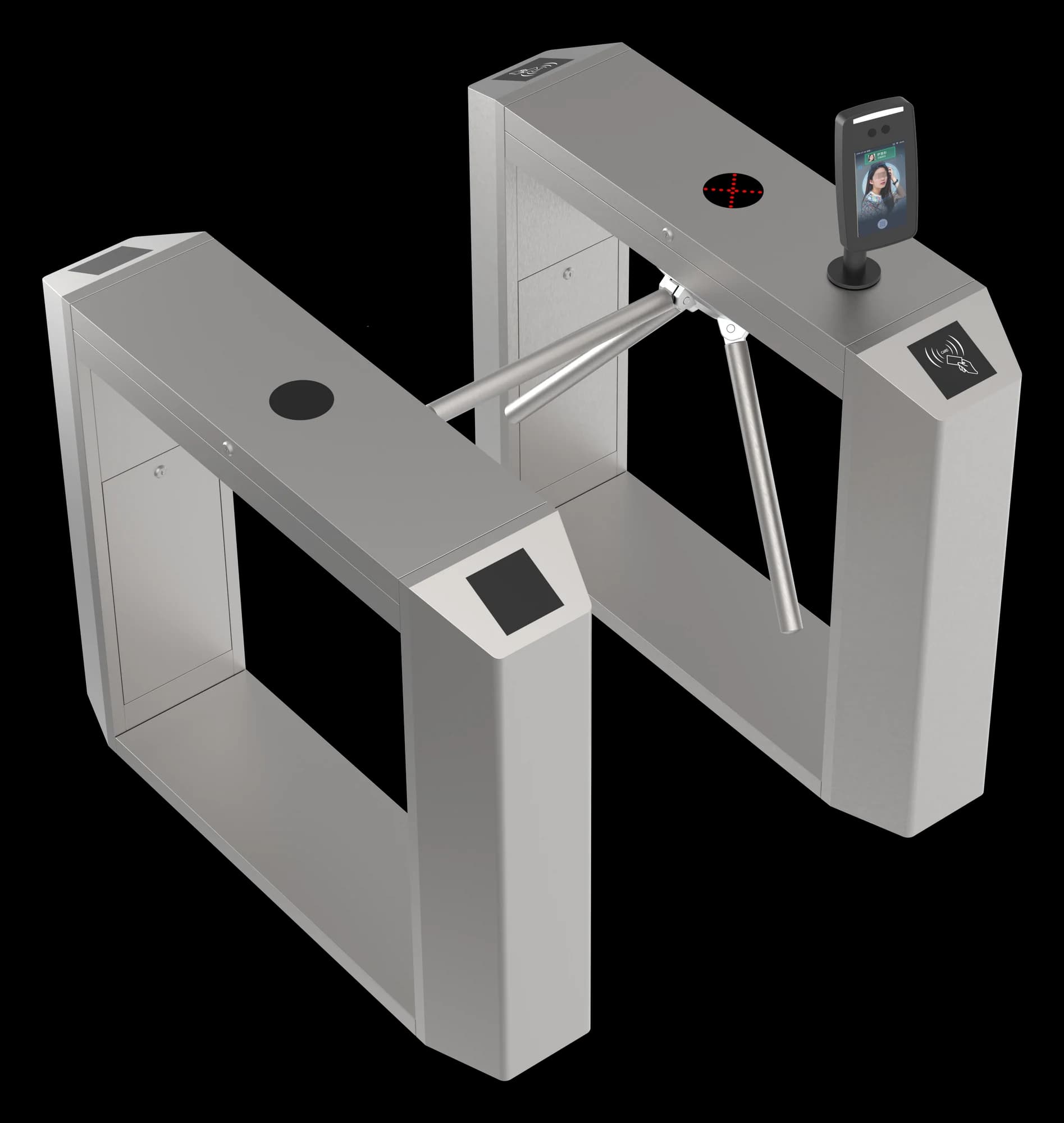
FC-TFTBJ bridge tripod turnstile passage with an illustrated face terminal
FC-TFTBJ · Configuration illustration. Pictured readers or face terminals are not standard equipment; confirm the supplied assembly.

Plan the credential check.
Confirm the connection.

Choose the reader and access controller for the required credential workflow, then confirm the gate input, signal timing, wiring and controller protocol. Commission the passage sequence, sensor response and emergency behaviour with the actual configuration.

Reader compatibility depends on the selected controller and signals. Credential readers, software and gate hardware are specified separately.

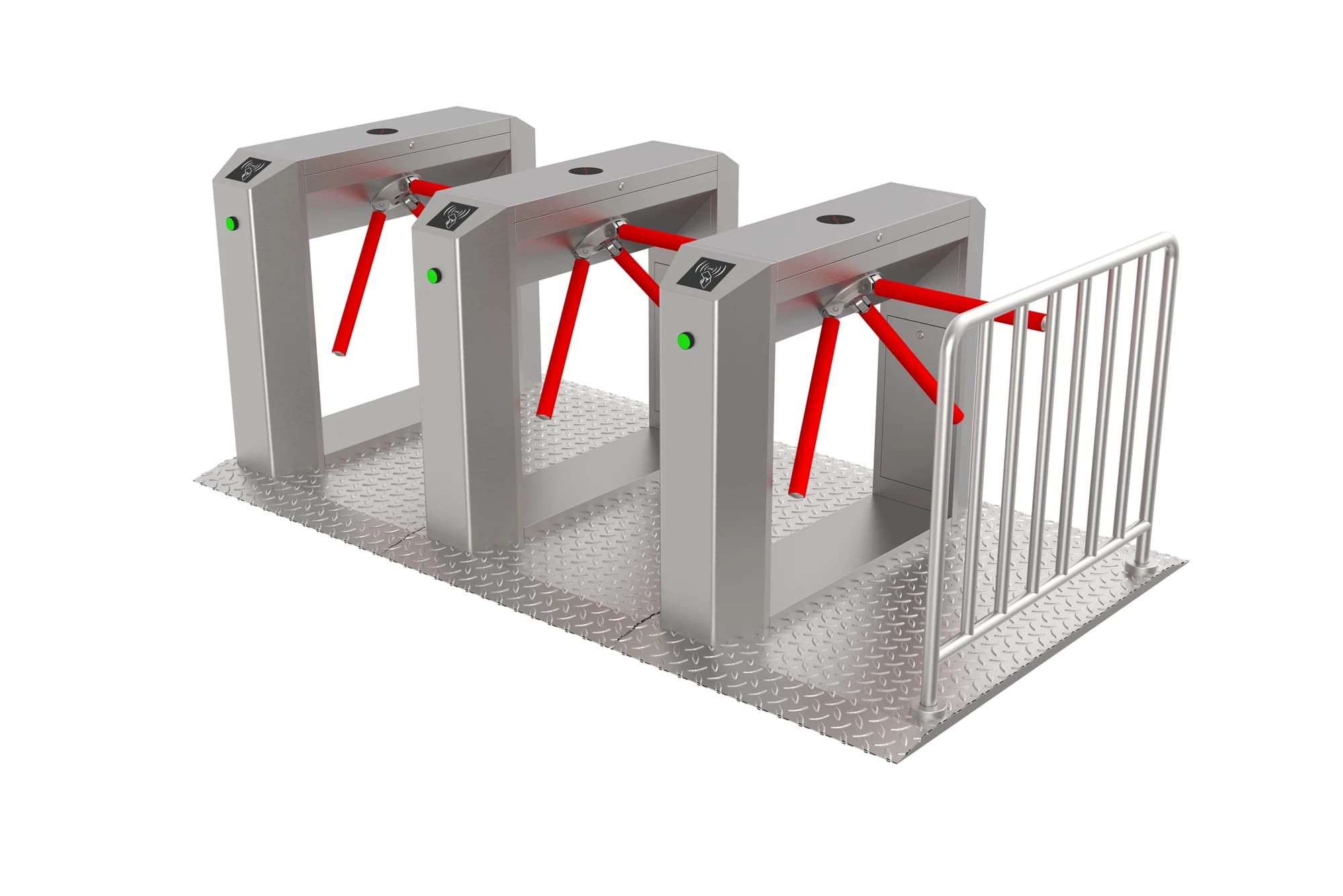
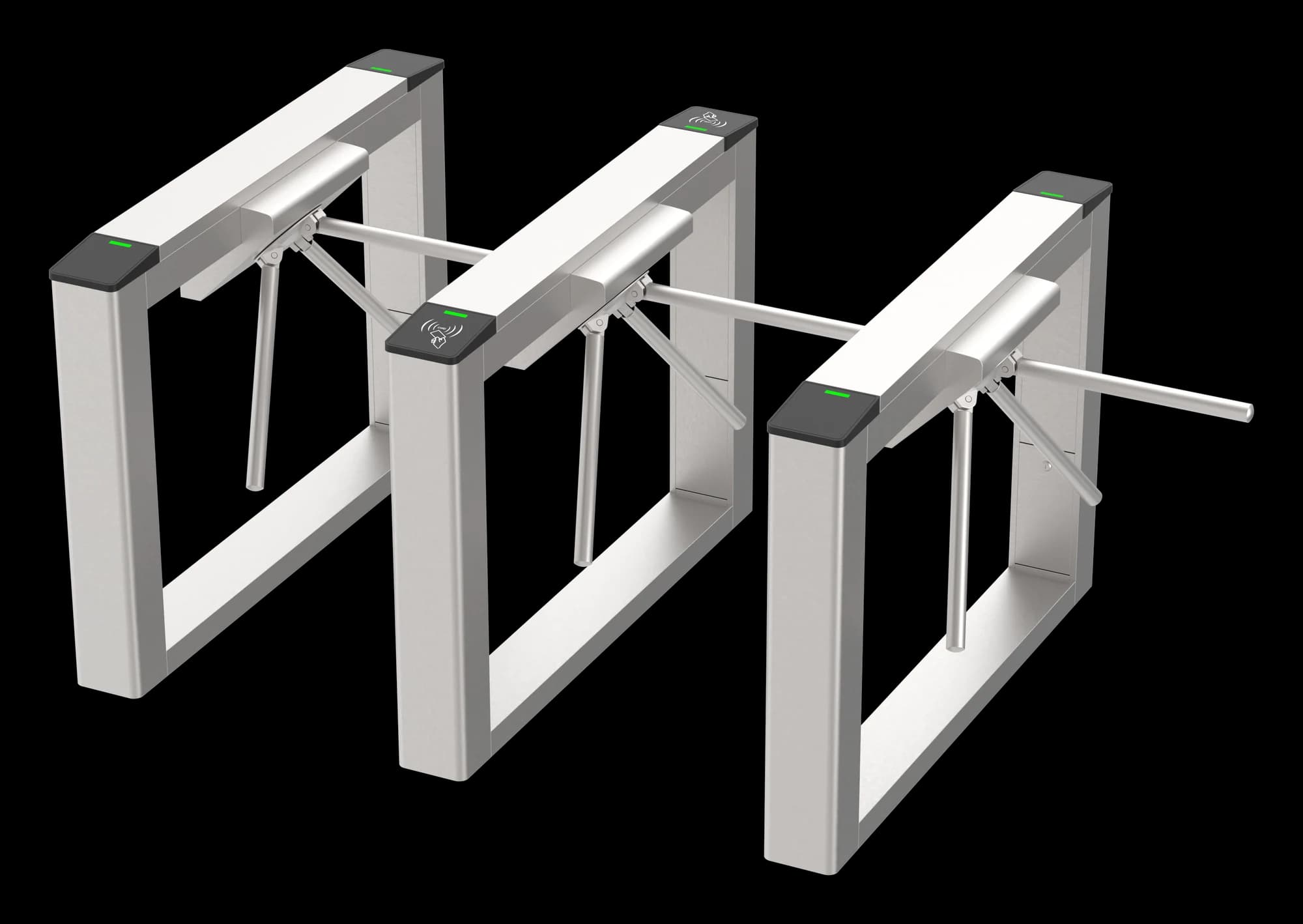
FC-TFTBJ tripod turnstiles arranged on a platform with side railings
FC-TFTBJ · Project configuration illustration. Platform, railings, readers and cabinet quantities require separate order confirmation.

Review the cabinet.
Plan the layout.

Use the additional supplied view to review the appearance and cabinet arrangement. Match the selected mechanism and complete entrance footprint to the approved order drawing.

Product views show possible cabinet and lane arrangements. Readers and terminals are selected separately; final quantities and dimensions follow the confirmed order drawing.

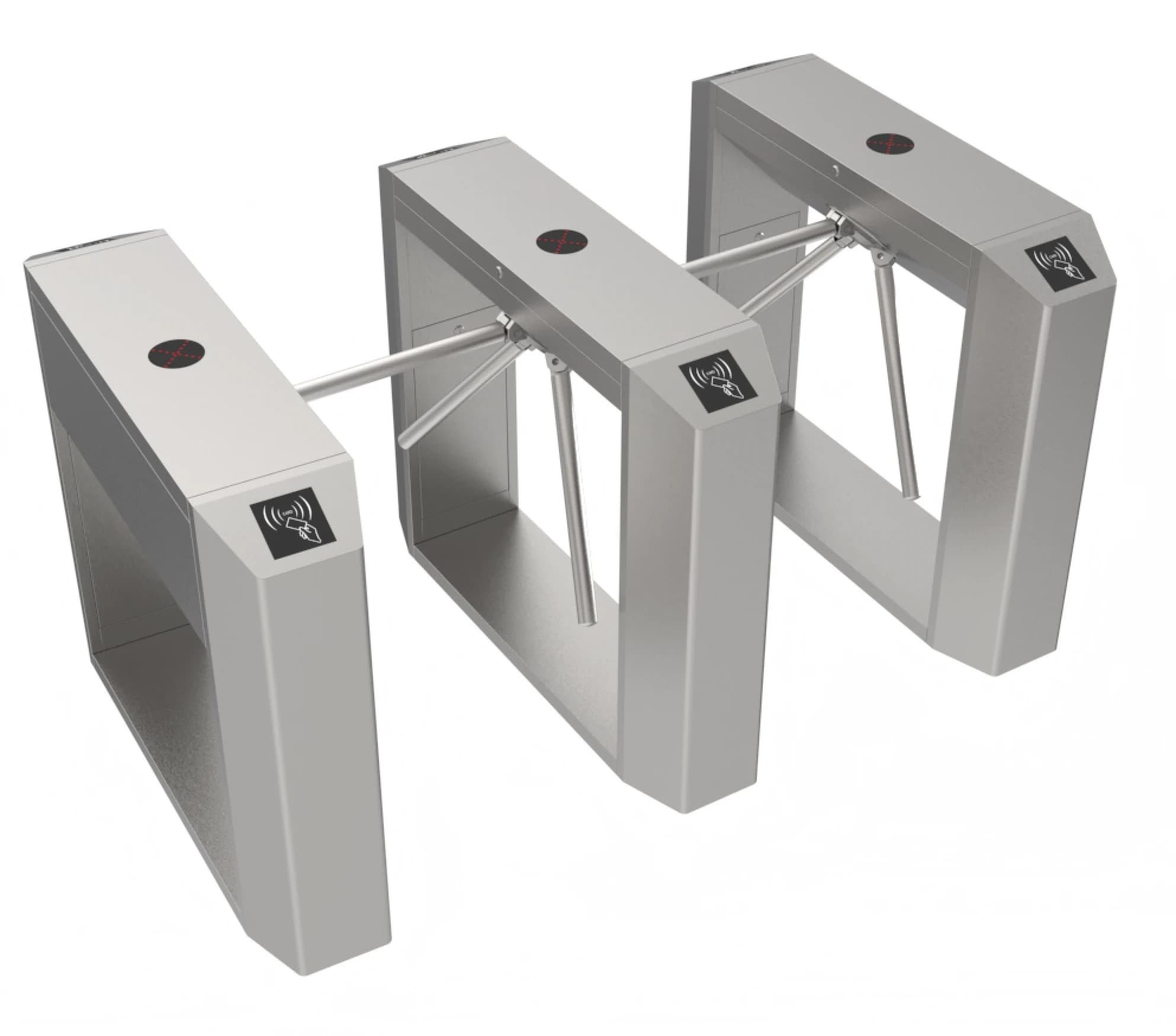
FC-TFTBJ tripod turnstile cabinets and an additional enclosure arranged for passage planning
FC-TFTBJ · Cabinet arrangement illustration. Confirm the mechanism configuration and required cabinet quantities; pictured readers are not standard equipment.

Measure the entrance.
Confirm the drawing.

Provide the entrance width, lane count, user requirements, floor construction, cable routes and service clearance. Obtain the approved model and configuration drawing before preparing fixing holes or wiring. Check the separate accessible route and the project’s emergency requirements.

  • Confirm the selected mechanism’s cabinet dimensions and passage width.
  • Review its electrical supply, controller and required signals.
  • Confirm cabinet count, reader mounting, cable routes and service clearance.
Request documents for FC-TFTBJ

The product view is not a drilling template or a certified site plan. A matching operating manual and installation drawing must be requested for the supplied configuration.

Product resources.

Manuals and integration support for FC-TFTBJ.

Documents for FC-TFTBJ →

Request the manual, dimension drawing and integration reference for your FC-TFTBJ configuration.

Request documents for FC-TFTBJ

Your questions, answered.

How do we choose a gate structure?

Start with the passage workflow, available space and users. Swing gates use swinging barrier leaves; flap gates retract their barriers; tripod turnstiles use a three-arm mechanism; full-height turnstiles use a rotating barrier; AB gates coordinate two sequential stages. Review the lane layout, supervision, accessible route and emergency behaviour with the project team.

Does a single-mechanism cabinet mean a complete single lane?

For compatible swing and flap systems, a single-mechanism cabinet controls one side of a lane. Two matching outer cabinets form one lane; adding a compatible double-mechanism cabinet between them can form two lanes. Single and double mechanisms describe cabinet configurations, not complete lane quantities. Tripod, full-height and AB gates use their own arrangements. Confirm the final quantities and footprint on the project drawing.

Is cabinet size the same as clear passage width?

No. Cabinet size, clear passage width and the complete installed footprint describe different measurements. Confirm the cabinet arrangement, arm or barrier movement, accessible route, fixing pattern and service clearance using the approved project drawing.

Are the pictured readers and face terminals included?

The pictures illustrate possible access configurations. Confirm the gate, readers, terminals, controllers, software and quantities in the order. Match the credential output, gate input, control protocol and power arrangement before integration.